
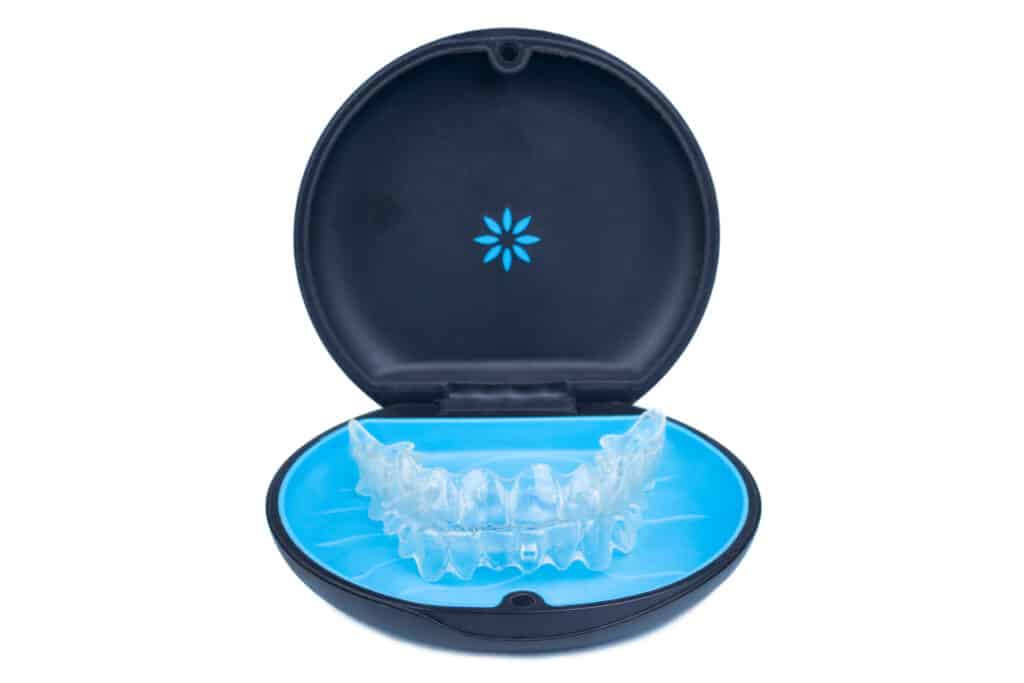
Invisalign: A Clearer Approach to Straighter Teeth
Want a straighter smile without traditional metal braces? Invisalign offers a discreet, convenient way to improve the alignment of your teeth using a series of clear, removable aligners.
Whether you’re an adult who never had orthodontic treatment or you’ve noticed your teeth shifting since you wore braces as a teenager, Invisalign may provide an option for improving your smile while fitting comfortably into your everyday routine.
At Evanson Dental, we can evaluate your teeth and bite to determine whether Invisalign is an appropriate option for your orthodontic needs.
What Is Invisalign?
Invisalign is a clear aligner system designed to gradually move teeth into planned positions.
Instead of brackets and wires, Invisalign treatment uses a series of custom-made, transparent aligners that fit over your teeth.
Each set of aligners applies controlled pressure to specific teeth. As you progress through the series, your teeth gradually move according to your customized treatment plan.
Because the aligners are clear, they’re much less noticeable than traditional metal braces.
What Can Invisalign Treat?
Invisalign may be used to address several common orthodontic concerns, including:
- Crowded teeth
- Gaps between teeth
- Crooked teeth
- Overbites
- Underbites
- Crossbites
- Open bites
- Certain cases of rotated teeth
- Teeth that have shifted after previous orthodontic treatment
The complexity of these conditions varies considerably.
While clear aligners can treat many orthodontic concerns, they aren’t necessarily the best option for every patient. An evaluation is needed to determine whether Invisalign can predictably accomplish your treatment goals.
How Does Invisalign Work?
Invisalign treatment begins with an evaluation of your teeth, gums, jaw, and bite.
Digital scans can be used to create a detailed model of your smile. These records help develop a customized treatment plan showing how your teeth are intended to move.
A series of aligners is then created specifically for you.
You’ll wear each set according to your treatment instructions before moving to the next aligners in the series.
Over time, these small movements gradually guide your teeth toward their planned positions.
How Many Hours a Day Do You Wear Invisalign?
For treatment to work as planned, Invisalign aligners need to be worn consistently.
Patients are generally instructed to wear their aligners for approximately 20 to 22 hours each day, removing them primarily to:
- Eat
- Drink beverages other than water
- Brush
- Floss
- Clean the aligners
One of the biggest responsibilities of clear aligner treatment is remembering to put them back in.
Leaving your aligners out for extended periods can interfere with tooth movement and potentially extend treatment.
Can You Eat With Invisalign?
Your aligners should generally be removed before eating.
This is one of the features many patients appreciate about Invisalign.
Traditional braces can require patients to avoid certain hard, sticky, or chewy foods that could damage brackets or wires. With clear aligners, you remove the trays during meals, so you typically don’t have the same food restrictions.
However, you’ll need to clean your teeth before putting the aligners back in whenever possible.
Can You Drink Coffee With Invisalign?
It’s generally best to remove Invisalign aligners before drinking coffee, tea, soda, wine, or other beverages besides plain water.
Drinking colored beverages while wearing your aligners can contribute to staining.
Hot beverages may also potentially affect the aligner material.
If you enjoy your morning coffee, simply remove your aligners, enjoy your drink, clean your teeth as appropriate, and put the aligners back in.
Just remember that the aligners still need to be worn for the recommended number of hours each day.
Is Invisalign Really Invisible?
Invisalign isn’t completely invisible, but the aligners are designed to be clear and relatively discreet.
From a normal conversational distance, many people may not immediately notice you’re wearing them.
Small tooth-colored attachments may sometimes be placed on certain teeth to help the aligners create specific movements. These can make the treatment slightly more noticeable, but they’re still generally much less prominent than traditional metal brackets.
What Are Invisalign Attachments?
Attachments are small pieces of tooth-colored dental material temporarily bonded to selected teeth.
They act like tiny handles that give the aligners additional leverage for certain movements.
Not every tooth needs an attachment, and the number and location vary depending on your treatment plan.
Once Invisalign treatment is complete, the attachments can be removed.
Does Invisalign Hurt?
You may notice pressure or mild soreness when you begin wearing a new set of aligners.
That’s because the trays are applying gentle forces to move your teeth.
The sensation typically improves as your mouth adjusts.
The aligners don’t contain metal brackets or wires, so there’s no wire to poke the inside of your cheek. However, some patients may experience temporary irritation from the edges of a new aligner.
If an aligner causes significant pain or doesn’t seem to fit properly, contact your dental provider rather than attempting to significantly alter it yourself.
Invisalign vs. Traditional Braces
Both Invisalign and traditional braces are designed to move teeth, but the experience can be quite different.
Invisalign
Invisalign aligners are:
- Clear
- Removable
- Easy to take out for meals
- Compatible with normal brushing and flossing
- Less noticeable than metal braces
However, treatment requires excellent patient compliance.
Traditional Braces
Traditional braces remain attached to the teeth throughout treatment.
Because patients can’t remove them, braces don’t depend on remembering to wear an appliance for 20 to 22 hours per day.
They may also be preferable for certain complex orthodontic movements.
The right choice depends on your bite, alignment, lifestyle, treatment goals, and clinical needs.
Is Invisalign Only for Adults?
No.
Invisalign can be an option for both adults and appropriate teenage patients.
Adults often choose clear aligners because they want orthodontic treatment that doesn’t significantly change their professional or social appearance.
Teenagers may also appreciate the discreet design and ability to remove the aligners for eating and oral hygiene.
However, clear aligner treatment requires responsibility. Patients must consistently wear and care for their aligners.
Am I Too Old for Invisalign?
Healthy teeth can move at many ages.
Adults who have wanted straighter teeth for years may still be candidates for orthodontic treatment.
Before beginning Invisalign, your dentist will evaluate your teeth and gums.
Existing oral health problems, such as active gum disease or untreated cavities, may need to be addressed before orthodontic treatment begins.
Age alone doesn’t necessarily prevent you from achieving a straighter smile.
Can Invisalign Fix Teeth That Shifted After Braces?
Yes, Invisalign may be an option for some patients whose teeth have shifted after previous orthodontic treatment.
Teeth naturally have a tendency to move over time, particularly when retainers aren’t worn as recommended.
If the shifting is relatively minor, clear aligner treatment may be able to move the teeth back toward better alignment.
More significant changes may require a longer treatment plan.
How Long Does Invisalign Take?
Treatment time varies.
Some relatively minor alignment concerns may require a shorter course of treatment, while more complex cases can take considerably longer.
Factors affecting your Invisalign timeline can include:
- Amount of tooth movement required
- Bite correction needed
- Complexity of the case
- How consistently aligners are worn
- How your teeth respond to treatment
After evaluating your smile, your provider can give you a more individualized estimate.
What Happens at Invisalign Checkups?
You’ll return for periodic appointments during treatment so your progress can be monitored.
These visits allow your provider to:
- Check tooth movement
- Evaluate aligner fit
- Monitor your bite
- Make sure treatment is progressing appropriately
- Provide additional aligners
- Address questions or concerns
Even though Invisalign doesn’t require traditional wire adjustments, regular monitoring remains an important part of treatment.
Is Invisalign Better for Oral Hygiene?
One advantage of removable aligners is that you can brush and floss without brackets or wires getting in the way.
Simply remove your aligners and complete your normal oral hygiene routine.
However, Invisalign doesn’t automatically prevent cavities or gum disease.
In fact, putting aligners over teeth covered in food debris or sugary residue can create an unfavorable environment for your teeth.
Good oral hygiene remains essential throughout treatment.
How Should You Clean Invisalign Aligners?
Keeping your trays clean helps them remain clear and fresh.
Follow the cleaning instructions provided by your dental team.
In general:
- Rinse aligners when removing them.
- Clean them regularly.
- Avoid very hot water.
- Don’t use harsh or abrasive cleaners unless recommended.
- Store them in their case when they’re not in your mouth.
- Brush and floss your teeth before reinserting them whenever possible.
Avoid wrapping aligners in a napkin during meals—they can easily be accidentally thrown away!
Can Invisalign Improve Your Oral Health?
Straighter teeth aren’t only about appearance.
Crowded or overlapping teeth can sometimes create areas that are more difficult to brush and floss effectively.
Improving alignment may make daily oral hygiene easier for some patients.
Correcting certain bite problems may also improve how the teeth come together.
However, Invisalign doesn’t replace brushing, flossing, professional cleanings, or other preventive dental care.
What Happens After Invisalign?
Once your teeth reach their planned positions, your treatment isn’t quite finished.
You’ll need a retainer.
Retainers help maintain your new tooth positions after active orthodontic treatment.
Without consistent retainer wear, teeth can gradually shift again.
Your dental provider will explain how often to wear your retainer based on your individual treatment plan.
Do You Have to Wear a Retainer Forever?
Long-term retainer wear is typically recommended because teeth can continue to shift throughout life.
Your retainer schedule may change over time. Some patients initially wear retainers more frequently before transitioning to nighttime use.
Following your retention plan is one of the best ways to protect the time and money you’ve invested in your new smile.
Who Is a Good Candidate for Invisalign?
You may be a candidate if you:
- Have crooked or crowded teeth
- Have gaps between teeth
- Have certain bite concerns
- Previously had braces and experienced shifting
- Want a less noticeable orthodontic option
- Have healthy teeth and gums
- Can commit to wearing aligners consistently
A consultation is the best way to determine whether Invisalign is right for you.
When Might Invisalign Not Be the Best Choice?
Some complex orthodontic problems may be better treated with traditional braces or specialized orthodontic care.
Invisalign may also be challenging for someone who isn’t prepared to wear the aligners consistently.
Additionally, untreated dental problems should generally be addressed before beginning orthodontic treatment.
Your provider can explain your options and recommend an approach based on your individual needs rather than simply choosing treatment based on appearance.
Start Your Invisalign Journey at Evanson Dental
A straighter smile doesn’t necessarily require a mouth full of metal brackets and wires.
Invisalign offers a clear, removable approach to orthodontic treatment that can fit into the everyday lives of many adults and teens.
Whether you’re concerned about crowding, spacing, your bite, or teeth that have shifted since previous orthodontic treatment, the first step is finding out whether clear aligners are right for you.
At Evanson Dental, we’ll evaluate your smile, discuss your goals, and determine whether Invisalign can help you achieve the straighter smile you’re looking for.
Contact Evanson Dental to schedule an Invisalign consultation and take the first step toward a healthier, more confident smile.
Leave a reply


