
National Gum Care Month: Why Healthy Gums Matter
When you think about a healthy smile, your teeth probably come to mind first. But strong, cavity-free teeth are only part of the picture. Your gums play an essential role in supporting your teeth and protecting your overall oral health.
September is National Gum Care Month, making it the perfect time to check in on your gum health and make sure you’re giving your gums the attention they deserve.
At Evanson Dental, we believe prevention is one of the most important parts of maintaining a healthy smile. From your daily brushing and flossing routine to regular professional cleanings, taking care of your gums today can help protect your smile for years to come.
Why Are Healthy Gums So Important?
Your gums surround your teeth and help protect the structures underneath them. Healthy gum tissue typically fits snugly around the teeth, helping create a barrier against harmful bacteria.
When plaque begins accumulating along the gumline, bacteria can irritate the gums and cause inflammation. Without proper care, this inflammation may eventually develop into gum disease.
Healthy gums are an important part of keeping your natural teeth stable, comfortable, and supported.
What Is Gum Disease?
Gum disease, also known as periodontal disease, is a condition that affects the tissues surrounding and supporting the teeth.
The earliest stage of gum disease is gingivitis. Gingivitis commonly develops when plaque accumulates around the gumline and causes inflammation.
Common signs can include:
- Red or swollen gums
- Bleeding when brushing or flossing
- Tender gums
- Persistent bad breath
- Changes around the gumline
When caught early, gingivitis can often be reversed with improved oral hygiene and professional dental care.
However, untreated gingivitis may progress to periodontitis, a more advanced form of gum disease. Periodontitis can damage the tissues and bone that support your teeth and may eventually contribute to loose teeth or tooth loss.
Are Bleeding Gums Normal?
It’s easy to dismiss a little blood when brushing or flossing, but gums that regularly bleed deserve attention.
Bleeding is often a sign of inflammation. Plaque buildup along the gumline can irritate gum tissue, making it more likely to bleed during brushing or flossing.
If you’ve recently started flossing consistently, you may initially notice some bleeding that improves as your gums become healthier. Persistent bleeding, however, should be discussed with your dentist.
Your dental team can evaluate your gums and determine whether gingivitis, periodontal disease, or another concern may be responsible.
Plaque and Tartar Can Put Your Gums at Risk
Plaque is constantly forming on your teeth. This sticky film contains bacteria and can accumulate along the gumline and between teeth.
Daily brushing and flossing help remove plaque before it causes problems.
If plaque remains on your teeth, however, it can harden into tartar, also known as calculus. Once tartar forms, brushing and flossing at home can’t remove it effectively.
Professional dental cleanings are needed to remove tartar and help maintain healthy teeth and gums.
How Can You Keep Your Gums Healthy?
The good news is that many of the same habits you already use to protect your teeth also benefit your gums.
Brush Twice Every Day
Brush for approximately two minutes twice a day with fluoride toothpaste and a soft-bristled toothbrush.
Pay attention to the gumline, where plaque commonly collects. Use gentle pressure rather than aggressively scrubbing your teeth and gums.
Floss Daily
Even thorough brushing can’t reach every surface between your teeth.
Daily flossing helps remove plaque and food particles from areas your toothbrush can’t effectively clean. Gently guide the floss around each tooth and slightly beneath the gumline rather than snapping it against your gums.
If traditional floss is difficult to use, talk to your dental team about other interdental cleaning options.
Drink Plenty of Water
Water helps rinse away food particles and supports healthy saliva production.
Saliva naturally helps clean your mouth and neutralize acids produced by bacteria. Choosing water throughout the day can be a simple way to support both your teeth and gums.
Limit Sugary Foods and Drinks
Frequently consuming sugary foods and beverages gives oral bacteria more opportunities to thrive.
You don’t necessarily have to eliminate your favorite treats, but limiting how frequently you consume sugary foods and drinks can help reduce your teeth and gums’ exposure to harmful plaque-producing bacteria.
Can Brushing Too Hard Damage Your Gums?
Brushing harder doesn’t mean you’re cleaning your teeth better.
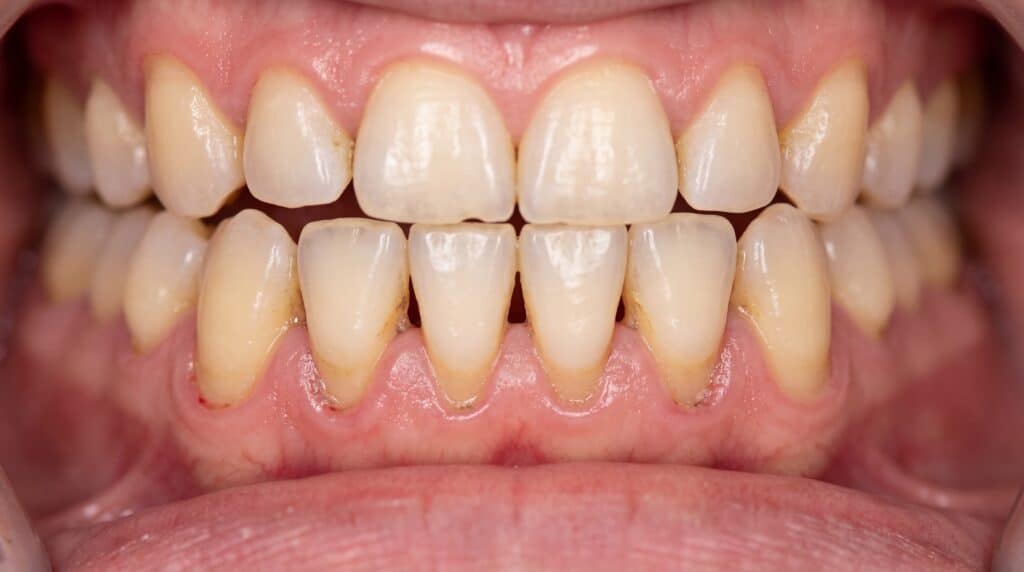
Aggressive brushing can irritate your gums and may contribute to gum recession over time. When gums recede, portions of the tooth root can become exposed, potentially increasing sensitivity.
Use a soft-bristled toothbrush and gentle movements when brushing along the gumline.
If you’re unsure about your technique, your dental hygienist can provide personalized recommendations during your next cleaning.
What Is Gum Recession?
Gum recession occurs when gum tissue pulls away from its normal position around a tooth, exposing more of the tooth or its root.
You may notice that a tooth appears longer than it used to or experience increased sensitivity near the gumline.
Gum recession can have several causes, including periodontal disease and aggressive brushing. Because gum tissue doesn’t simply grow back on its own in many cases, early evaluation is important.
If you notice changes in your gumline, bring them to your dentist’s attention.
Don’t Ignore Persistent Bad Breath
Bad breath after a garlicky meal is one thing. Bad breath that doesn’t seem to go away is another.
Persistent bad breath can sometimes be associated with bacteria and plaque buildup in the mouth. Gum disease may also contribute to ongoing unpleasant breath.
If brushing, flossing, and cleaning your tongue don’t improve the problem, schedule a dental evaluation to determine whether an oral health concern could be responsible.
Why Professional Dental Cleanings Matter
Even if you’re diligent about brushing and flossing, professional dental cleanings remain an important part of your oral health routine.
Your dental hygienist can remove hardened tartar that you can’t eliminate with a toothbrush or floss at home.
Routine visits also allow your dental team to monitor your gum health and identify changes that may otherwise go unnoticed.
Because early gum disease doesn’t always cause significant discomfort, you shouldn’t wait until your gums hurt to visit the dentist.
Gum Health Matters for the Whole Family
Good gum-care habits can benefit patients at every stage of life.
Children should learn early that brushing isn’t only about cleaning their teeth—they also need to gently clean around the gumline. As children become able to floss independently, making it part of their daily routine can establish healthy habits for adulthood.
Teenagers and adults should continue prioritizing daily oral hygiene and routine dental visits.
As we age, factors such as medications, dry mouth, changes in dexterity, and certain health conditions may make maintaining oral health more challenging. Your dental team can help adjust your routine to meet your changing needs.
Signs Your Gums Need Professional Attention
Don’t wait for severe discomfort before talking to your dentist about changes in your gums.
Schedule an appointment if you notice:
- Frequent bleeding
- Redness or swelling
- Tender gums
- Gum recession
- Persistent bad breath
- Loose permanent teeth
- Changes in the way your teeth fit together
- Pus or drainage around the gumline
The earlier a gum problem is identified, the sooner your dental team can recommend appropriate care.
Celebrate National Gum Care Month With Evanson Dental
National Gum Care Month is an excellent reminder to look beyond your teeth and give your gums some attention, too.
Brushing twice a day, flossing daily, making smart dietary choices, and keeping up with routine dental cleanings can all help protect your gum health. Just as importantly, pay attention to changes such as bleeding, swelling, recession, or persistent bad breath rather than waiting for them to become more serious.
At Evanson Dental, we’re committed to helping patients maintain healthy smiles through preventive and personalized dental care.
This National Gum Care Month, make your gums a priority. If you’re due for a cleaning or have concerns about your gum health, contact Evanson Dental today to schedule an appointment.
Leave a reply


